A good bag of pumpkin seeds starts with a small decision: do you want the slow crunch of a whole seed, or a spoonful of kernels you can scatter straight over dinner? Once you know that, the choice of flavor and pack size becomes much easier.
At Premium Orchard, our pumpkin seed collection centers on roasted, in-shell seeds. The original Sea Salt bag keeps the seasoning straightforward. BBQ, Dill and Salt & Vinegar take the same snack in different directions. Here is how we suggest choosing between them, and how to compare them fairly with other seed snacks.
Start with the shell
The pale outer hull and the green kernel are two parts of a pumpkin seed. The word “pepitas” commonly describes the green kernels sold without that outer shell. Both formats belong in the kitchen, but they bring different textures and require different preparation. A recipe asking for a smooth seed sauce usually expects kernels, even if its title simply says pumpkin seeds.
Our original Lady Nail pumpkin seeds are an in-shell snack. They are imported from Bulgaria and packaged in the United States. The slender shape and roasted shell give them a more deliberate eating experience than a handful of kernels. If you prefer to remove the hull, crack it and eat the seed inside. Do not force yourself to chew a shell that feels too tough.
For sunflower seeds, the distinction is especially important: crack the shell and discard it. Our sunflower collection contains whole seeds, not ready-to-scatter kernels. Keep a small empty bowl nearby when serving them, and never mix discarded shells back into the shared serving dish.
“Yellow-white hulls hold the flat green seed.”
University of Alaska Fairbanks Cooperative Extension
Match the format to the occasion
| What you want | Useful format | Preparation |
|---|---|---|
| A snack to enjoy slowly | Roasted in-shell pumpkin seeds | Serve in a small bowl; remove hulls if preferred |
| A smooth sauce or dip | Shell-free green kernels | Use the kernel format specified by the recipe |
| Crunch over a salad | Kernels or nuts | Add just before serving |
| A shell-cracking snack | Whole sunflower seeds | Eat the kernels and discard the shells |
Think about where you will eat as well as what you like. A desk with paperwork is less forgiving of shells than a picnic table. If you are packing food for a journey, choose a container you can close with one hand. For shared snacks, give everyone their own small portion rather than passing around the open retail bag.
Texture is personal. The same whole seed that one person enjoys for its sturdy crunch may feel too chewy to someone who expects a soft kernel. Understanding the format before ordering helps avoid that mismatch. The product photograph, the words “in shell” and the preparation advice are all more useful than a broad promise that a snack suits everyone.
Choose a flavor with something to pair it with
Sea Salt is our straightforward starting point. It leaves room for the roasted seed flavor and fits comfortably alongside a sandwich, crisp vegetables or a simple drink. If you have never tried our pumpkin seeds, the 15 oz original bag lets you get to know the texture before choosing a multipack.
BBQ takes a more savory direction. Think of it as a snack-bowl choice for a film, a board game or a gathering where bold seasoning belongs. Dill is aromatic and distinctive. Salt & Vinegar brings a sharper, tangy finish. None needs extra seasoning before eating. Taste a small portion first, particularly if you usually prefer lightly seasoned foods.
There is no need to buy every flavor to find a favorite. Start from something you already enjoy: the fragrance of dill, the tang of vinegar, or a familiar BBQ profile. The flavored pumpkin seed collection keeps the three options together so you can compare the bag size and description side by side, with the formats clearly described.
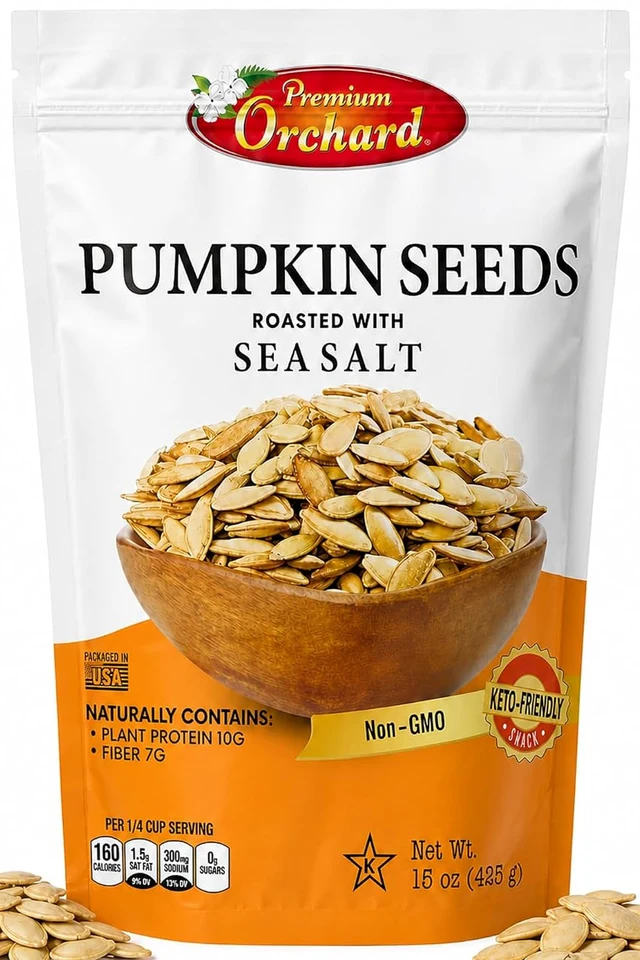
Sea Salt Pumpkin Seeds
Dry-roasted Lady Nail pumpkin seeds with a delicate shell and a clean sea-salt finish. A classic for slow, satisfying snacking.
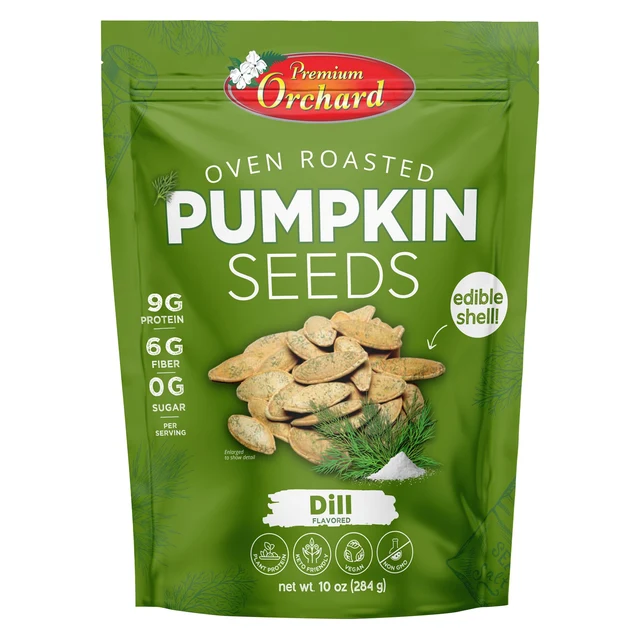
Dill Pumpkin Seeds
Oven-roasted pumpkin seeds with an aromatic dill flavor. A lively alternative to the original sea-salt bag.
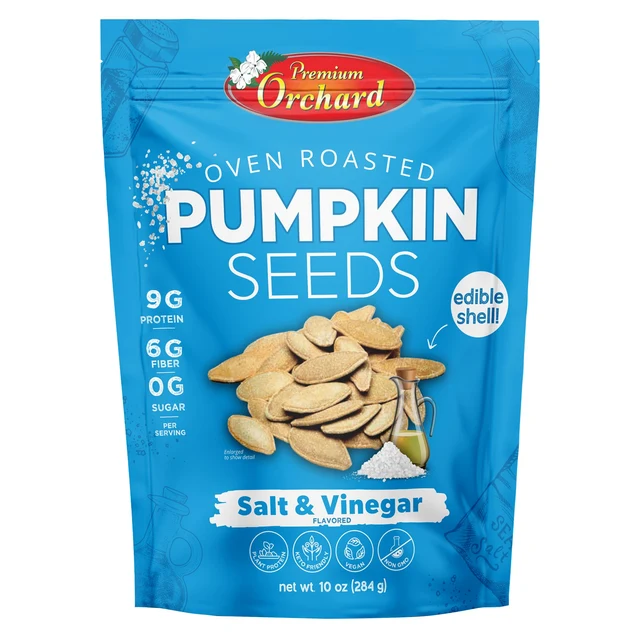
Salt & Vinegar Pumpkin Seeds
A tangy salt-and-vinegar finish on roasted, in-shell pumpkin seeds. Choose this bag when you like a sharper savory snack.
Prices can change. The price and availability shown in the purchase tab apply to your order. Purchase buttons open a new tab.
Read the label in the right order
Turn to the serving size first, then look at the nutrient you want to compare. Numbers for a small serving and a large serving cannot be lined up as though the portions were equal. Whole-seed and kernel labels may also describe different amounts or bases. Check the wording around the serving weight before drawing conclusions.
For a practical comparison, write down the serving weight in grams beside calories, sodium and protein. If two labels use different weights, compare them on the same basis. You do not need a complicated spreadsheet: dividing the listed amount by the serving grams gives an amount per gram, which you can then multiply by a common serving weight.
A worked example helps: if an imaginary product lists 120 mg sodium in 30 g, that is 4 mg per gram. At a common 25 g portion, it would provide 100 mg. These are example numbers for the calculation, not Premium Orchard nutrition values. Always use the label on the particular bag you are comparing.
The phrase “lightly salted” describes a seasoning approach; it should not replace the sodium number when sodium is the reason you are comparing products. The FDA explains that 5% Daily Value or less is low and 20% or more is high for a nutrient per serving. Its sodium guide explains how to use those percentages. Personal dietary requirements belong with a qualified professional.
Ingredients matter more than a collection-wide badge
Read the exact flavor’s ingredient list rather than borrowing the information from the Sea Salt bag. A seasoning blend can contain ingredients that a plain seed does not. Formulas and packaging can change, so the bag in your hand is the most relevant place to check before eating.
Allergen statements deserve a separate look. “Contains” information and shared-equipment warnings answer different questions. A seed snack is not automatically suitable for someone avoiding peanuts or tree nuts, particularly when the same producer handles a broad nut assortment. For a specific allergy question, use the manufacturer contact on the package and keep the product name and lot code available.
Certification marks also need their own check. A kosher symbol refers to a particular certification and scope; it does not mean a product is organic, free from every allergen or lower in sodium. Our quality and label guide helps separate these questions so that one familiar symbol does not stand in for the whole label.
One bag or three?
Choose a single bag when you are learning which texture you like, trying a flavor, or stocking a small household. A multipack can make sense after you know you enjoy the product. The advantage is practical: you can open one bag and leave the remaining bags sealed, rather than opening a much larger container at once.
Compare total weight as well as the package count. Our original three-bag option contains three 15 oz bags, for 45 oz in total. That is different from three small snack portions. To compare value, divide the current total price by the total ounces, while allowing for any delivery charge or checkout terms that apply to your order.
Price alone cannot tell you whether a larger purchase suits your routine. Consider cupboard space, how often you snack, who else will share it and whether you prefer changing flavors. A bag that you enjoy finishing is a better fit than a large quantity you bought only because the unit price looked attractive.
Serve a little, close the bag
Pour a portion into a bowl and close the original package before sitting down. This simple habit keeps the rest of the snack away from the table and makes it easier to judge how much you want. You can always serve more. Use a clean, dry scoop if several people share the bag.
Keep opened bags away from steam, direct sunlight and a warm cooker. Follow the printed storage instructions and best-before information rather than assuming every seed snack has the same shelf life. If you decant a bag into another container, keep the label and lot code with it. Our freshness guide covers the useful details.
For a snack board, keep whole seeds in a clearly separate bowl from shell-free nuts and fruit. That makes the eating format obvious and lets guests choose the texture they want. Put a shell bowl beside sunflower seeds. If children are eating with you, choose foods and preparation appropriate to their age and chewing ability and supervise as needed.
Build a small rotation you will actually use
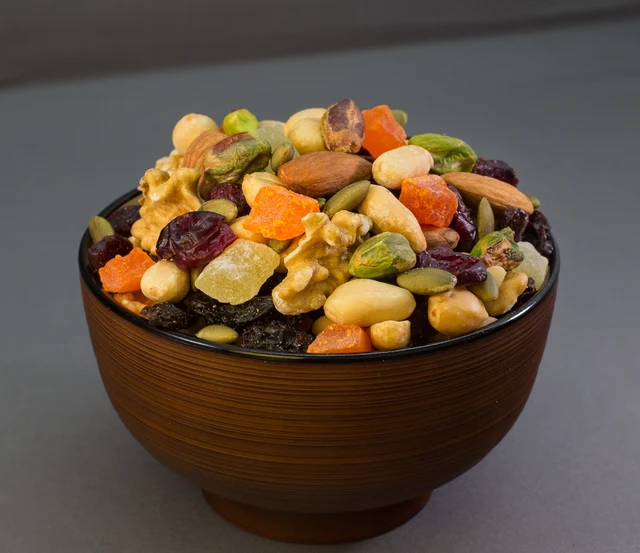
Try one familiar savory flavor and one contrasting snack. Sea Salt pumpkin seeds alongside a fruit-and-nut blend gives you two very different textures without a cupboard full of half-open bags. You can keep the whole seeds for a relaxed break and the mix for a portable portion or a breakfast topping.
When you want ideas for combining those foods, our trail mix guide offers serving combinations and a simple planning table. To choose a bag now, explore Premium Orchard pumpkin seeds. Start with the format, choose the flavor, and let your own appetite decide the occasion.